
60% of therapists are not doing sensory assessments- here's why
Nov 30, 2025
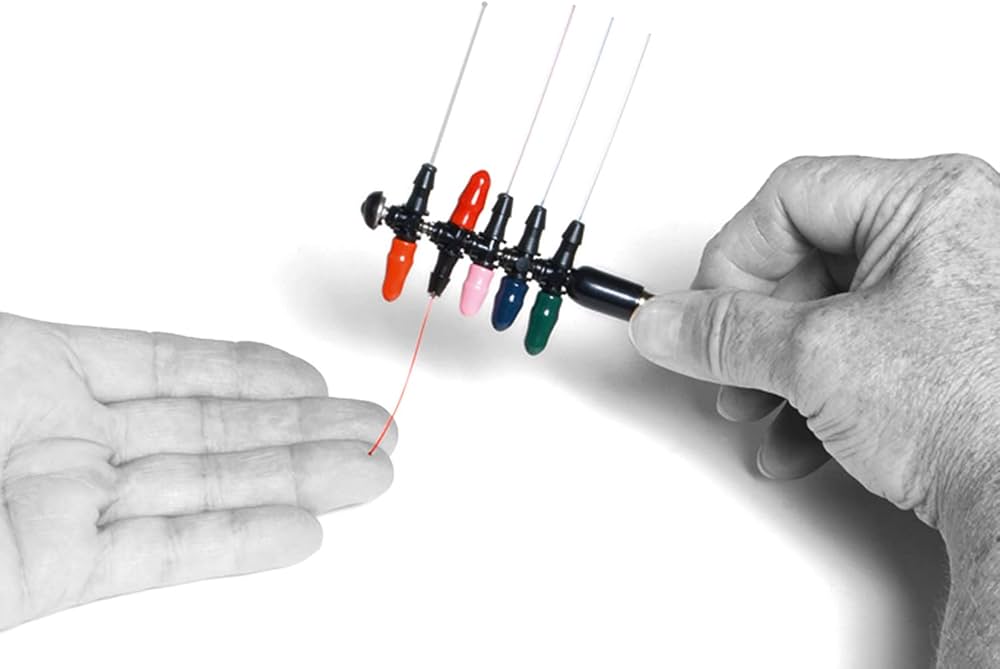
Somatosensory impairment affects 50-60% of stroke survivors (Pumpa, Cahill & Carey, 2015). Loss of touch, proprioception, and discriminative sensation profoundly impacts functional recovery, limiting the ability to perform activities of daily living and reducing quality of life. Evidence-based assessment tools and treatment protocols exist, yet practice guidelines are rarely followed (Gillen & Nilsen, 2023).
A landmark 2015 Australian study revealed a striking gap: more than half of occupational therapists and physiotherapists surveyed were unaware of best practice for sensory assessment and treatment after stroke (Pumpa, Cahill & Carey, 2015).
These findings are echoed in Singapore. A 2022 study by the Rehabilitation Research Institute of Singapore examined current practice among 132 therapists across public hospitals and rehabilitation centres. The study found that 64.4% spent no more than half their time on somatosensory interventions, with standardised assessments rarely used (Sidarta et al., 2022).
The Evidence-Practice Gap
The Australian study documented widespread gaps (Pumpa, Cahill & Carey, 2015):
Limited Awareness: More than 50% of therapists were unaware of evidence-based approaches. Despite established research demonstrating effective sensory retraining, knowledge had not penetrated routine practice.
Non-Specific Treatment: Eighty percent used compensatory strategies—teaching patients to rely on vision—rather than actively retraining impaired sensation.
Low Confidence: Less than half reported satisfaction with their assessments and treatments. Fewer than half expressed confidence in their ability to treat sensory impairment.
Why Therapists Aren't Assessing Sensation
Time and Resource Requirements
Current evidence-based methods—including validated protocols like SENSe therapy and standardized assessments like the Revised Nottingham Sensory Assessment—still require 20-30 minutes of dedicated therapist time per patient. This remains the biggest constraint to widespread adoption. Even with improved training and institutional mandates, therapist workload continues to limit which patients receive sensory assessment and intervention.
Subjectivity and Variability
Manual assessments also introduce subjectivity. Results depend on therapist technique, patient comprehension of instructions, and interpretation of responses. This variability makes it difficult to reliably track progress or regression over time, particularly when different therapists conduct assessments across sessions or when comparing outcomes across patients and facilities.
Knowledge Gaps
Graduate programs provide limited training in somatosensory assessment. Continuing education emphasizes motor interventions. Sensory rehabilitation remains neglected.
The Revised Nottingham Sensory Assessment is a validated tool, yet many therapists remain unfamiliar with it (Wu et al., 2016).
Institutional Gaps
Healthcare organizations rarely mandate sensory screening. Without institutional requirements, busy therapists skip it. Standard assessment batteries prioritize motor function, activities of daily living, and cognition.
Belief That Sensory Loss Is Untreatable
Sensory deficits are invisible and their functional implications less immediately apparent (Turville et al., 2021).
A pervasive belief holds that sensory loss is permanent and untreatable (Turville et al., 2021). Many therapists learned compensation is the only approach.
Research contradicts this. Systematic reviews demonstrate that sensory discrimination retraining produces measurable improvements (Serrada, Hordacre & Hillier, 2019). The SENSe trial showed intensive retraining improved both sensation and upper limb use (Carey, Macdonell & Matyas, 2011).
Yet this evidence has not penetrated practice. The knowledge translation gap can span decades.
The Clinical Consequences
When therapists don't assess sensation systematically, patients with impairments go unidentified. Without identification, intervention cannot occur.
Unaddressed sensory loss predicts poor outcomes. Studies show somatosensory impairment independently contributes to disability, even after controlling for motor impairment (Scalha et al., 2025). Patients exhibit reduced dexterity, impaired object manipulation, and difficulty with fine motor tasks.
Safety risks emerge. Patients cannot detect tissue damage from pressure, temperature extremes, or sharp objects—leading to preventable burns, pressure ulcers, and lacerations.
The absence of sensation-focused rehabilitation represents a missed opportunity. Targeted training drives cortical reorganization and functional improvement (Serrada, Hordacre & Hillier, 2019). When not offered, patients lose potential for recovery.
Evidence-Based Solutions
Education and Training
Professional development must incorporate evidence-based sensory assessment. The SENSe therapy protocol provides a structured approach suitable for training (Carey, Macdonell & Matyas, 2011). Graduate curricula should expand sensory rehabilitation content.
Institutional Protocols
Organizations should mandate sensory screening as part of standard stroke assessment. Electronic medical record prompts can cue therapists. Quality metrics tracking screening rates create accountability.
Knowledge Translation Research
The SENSe Implement project tests strategies to increase adoption of evidence-based sensory rehabilitation through targeted education, audit and feedback, and implementation support (Cahill et al., 2018).
Technology Solutions
Automated sensory assessment platforms can standardize testing, reduce time burden, and generate objective data. The Singapore study showed that while technology adoption for assessment was scarce, 87.1% of therapists integrated technology into motor intervention (Sidarta et al., 2022)—suggesting potential for expanding to sensory assessment.
A Call to Action
Sixty percent of stroke survivors experience sensory impairment. Yet more than half of therapists remain unaware of evidence-based approaches. This gap denies patients access to interventions that could meaningfully improve function and quality of life.
The research is clear: sensory discrimination retraining works. Validated tools exist. Clinical guidelines recommend systematic evaluation.
What remains is implementation. Rehabilitation organizations must prioritize sensory assessment. Educational institutions must prepare therapists with requisite knowledge. Healthcare systems must allocate resources. Researchers must continue testing implementation strategies.
For every stroke survivor whose sensory loss goes unrecognized and untreated, we miss an opportunity for recovery. The tools exist. The evidence exists. Closing the gap is a commitment to translating research into care that patients deserve.
This is why we built Artemis, to help automate and standardize sensory assessment, with the ability to deploy the patient-driven test at point of care.
References
Cahill, L. S., Lannin, N. A., Mak-Yuen, Y., Turville, M. L. & Carey, L. M. (2018). Changing practice in the assessment and treatment of somatosensory loss in stroke survivors: protocol for a knowledge translation study. BMC Health Services Research, 18(1), 34.
Carey, L. M., Macdonell, R. & Matyas, T. A. (2011). SENSe: Study of the Effectiveness of Neurorehabilitation on Sensation: a randomized controlled trial. Neurorehabilitation and Neural Repair, 25(4), 304-313.
Gillen, G. & Nilsen, D. M. (2023). Occupational therapy practice guidelines for adults with stroke. American Occupational Therapy Association.
Pumpa, L. U., Cahill, L. S. & Carey, L. M. (2015). Somatosensory assessment and treatment after stroke: an evidence-practice gap. Australian Occupational Therapy Journal, 62(2), 93-104.
Scalha, T. B., Marques, I. A., Campos, T. F., Faria-Fortini, I., Faria, C. D. C. M. & Teixeira-Salmela, L. F. (2025). Prevalence and characterization of sensory impairments and their contribution to functional disability in adults with stroke. Annals of Physical and Rehabilitation Medicine, 68(1), 101864.
Serrada, I., Hordacre, B. & Hillier, S. L. (2019). Does sensory retraining improve sensation and sensorimotor function following stroke: a systematic review and meta-analysis. Frontiers in Neuroscience, 13, 402.
Sidarta, A., Lim, Y. C., Wong, R. A., Tan, I. O., Kuah, C. W. K. & Ang, W. T. (2022). Current clinical practice in managing somatosensory impairments and the use of technology in stroke rehabilitation. PLoS ONE, 17(8), e0270693.
Turville, M., Carey, L. M., Matyas, T. A. & Blennerhassett, J. M. (2021). Barriers to the provision of evidence-based occupational therapy for sensory impairment post-stroke: a qualitative study. BMJ Open, 11(2), e042879.
Wu, C., Chuang, I., Ma, H., Lin, K. & Chen, C. (2016). Validity and responsiveness of the Revised Nottingham Sensation Assessment for outcome evaluation in stroke rehabilitation. American Journal of Occupational Therapy, 70(2), 7002290040p1-7002290040p8.